
Integrating UAV remote sensing with glasshouse phenotyping to predict field performance in wheat
Researchers: Violet Ochieng'; Dr Kanthu Joseph Mhango
This project is a phenomics-led search for a stable representation of wheat function that persists through time and across glasshouse and field environments. Repeated physiological measurements, high-dimensional sensing and crop models will be used to discover that phenome and test whether it supports early prediction of biomass, yield and varietal rank.
Central hypothesis
The central hypothesis is that genotypic differences in crop physiology can be quantified repeatably under controlled conditions, retain their rank and magnitude in the field, and parameterise crop models with enough accuracy to support selection for yield. Radiation-use efficiency (RUE) and canopy chlorophyll intensity (CCI) provide two candidate traits for the initial tests, alongside photosynthetic measurements and wider phenomic evidence.
These candidates define a starting point for discovery. The phenome may comprise a broader constellation of measured traits, temporal response curves, hyperspectral signatures or a latent field learned from repeated observations. Its value will depend on persistence across environments and its relationship with economically important outcomes.
Discovering the persistent phenome
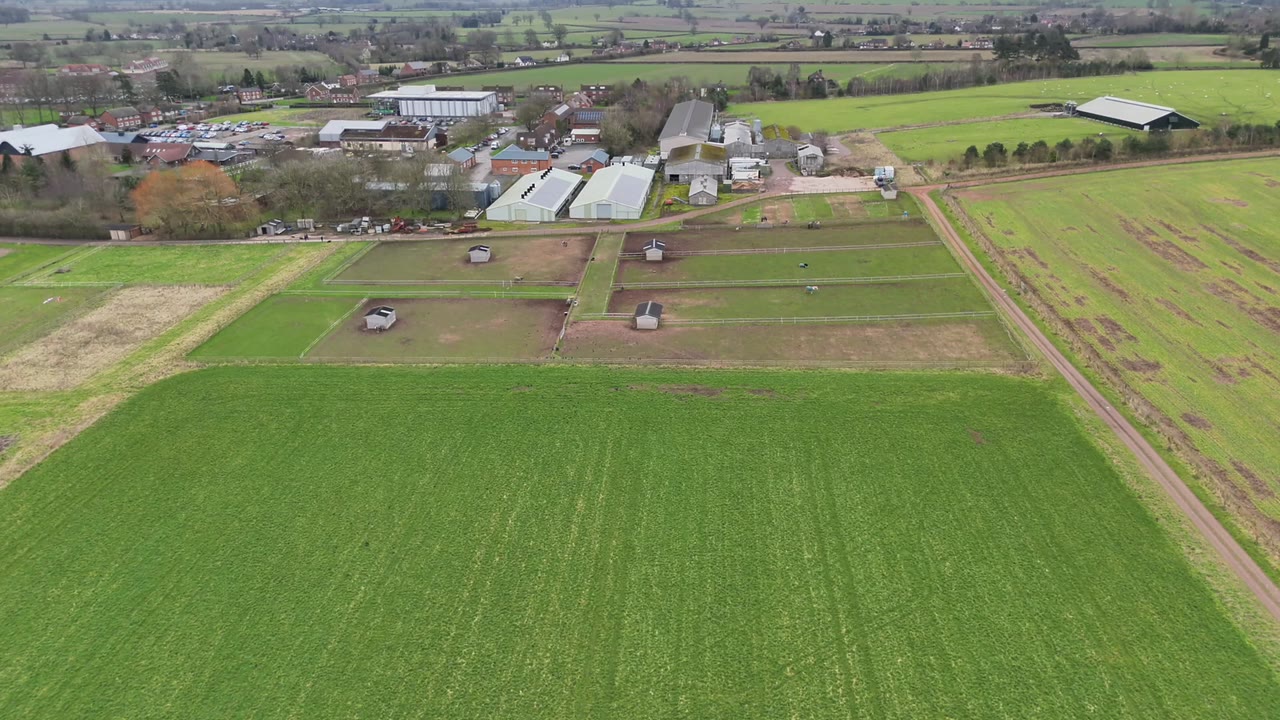
The same wheat material will be characterised in the glasshouse and field through coordinated physiological measurements and repeated sensing. Candidate observations include radiation capture and conversion, chlorophyll-related traits, photosynthetic behaviour, hyperspectral reflectance, canopy structure, temperature and developmental trajectories. UAV surveys will extend the field component across space and time.
The analysis will search for phenomic structure that remains recognisable as growing conditions change. Directly observed traits, multivariate embeddings and learned latent representations will all be considered. Quantitative genetics will support this search through estimates of repeatability, heritability, genetic correlation and genotype-by-environment behaviour. These estimates will help establish which components carry durable biological information.
Crop models as phenome translators
Crop models will connect the discovered phenome to field biomass, yield and other economically important traits. Structural-functional and process-based models will use nursery-derived physiological information as crop parameters. Empirical machine-learning approaches will provide a complementary route, including representation-learning models that can reconstruct phenomic patterns and relate their latent structure to target phenotypes.
Model comparison will examine prediction error, rank stability, calibration, uncertainty and transfer across environments. The central test is practical: can a phenome measured early in controlled conditions drive simulations that rank wheat varieties accurately enough to guide field selection?
Testable propositions
- Candidate phenomic traits, including radiation-use efficiency and chlorophyll intensity, can be measured with high repeatability in the glasshouse.
- Genotypic rankings derived from the glasshouse phenome predict rankings observed under field conditions.
- Crop models informed by glasshouse phenomics improve prediction of field biomass and yield relative to generic baselines.
- Prospective selection based on early phenomics and simulation produces measurable gain in independent field evaluation.
Phenomic selection and genomic context
Phenomic selection studies will test how early measurements and model simulations can rank material for traits that are expensive or slow to measure in the field. Phenomic rankings will be compared with genome-based rankings and conventional field evidence. Agreement will indicate shared genetic and physiological structure; divergence may reveal complementary information about realised crop function.
The phenome itself may become a target for genetic investigation. Once stable phenomic components are established, subsequent work can examine genomic regions associated with their expression and persistence. Prospective field trials will provide the final evidence for selection response and operational value.
Intended contribution
The project aims to establish whether a persistent wheat phenome can shorten the route from biological measurement to selection. A successful framework would allow economically important traits to be predicted earlier, clarify the contribution of glasshouse and UAV phenotyping, and give breeders an auditable basis for combining phenomic, genomic and field evidence.